Many ETS are silent at first, even after years. This means that a person can be infected without visible symptoms, transmitting the infection without knowing it. It is therefore vital to be aware of these “silent” STDs and to act responsibly.
In this article we will focus on explaining those infections that often present without obvious symptoms, how they evolve if left untreated, and why to have an infection checked. test, like Ailin's, is the key to protecting your health.
List of STDs without visible symptoms
There are a number of STDs which, by their nature, tend to be asymptomatic or have very mild symptoms:
- ChlamydiaIn women, 70 % of infections are symptomless; in men, approximately 50 % are usually silent.
- Gonorrhoea50 % of women and about 50 % of men may also have no visible signs.
- Syphilis, genital herpes, HPV (human papillomavirus), and hepatitis B.are common among asymptomatic STDs, especially in the early stages.
- TrichomoniasisIt can also occur without symptoms, especially in men.
HIV without symptoms for years
HIV goes through a phase called «chronic asymptomatic infection» or clinical latency. In this stage, some people may have no symptoms for 10 years or more, even though the virus is still active in their body. Not only does this make diagnosis difficult, but the person may become infected and unknowingly transmit the virus. However, if not detected and treated early, the infection can progress to AIDS, an advanced stage that severely compromises the immune system and can be life-threatening.
What happens if an STD is not treated?
Failure to identify or treat an STD in time can lead to serious consequences:
- Chlamydiais a bacterial infection that does not usually heal on its own and requires treatment with antibiotics. If left untreated, it can cause serious complications such as pelvic inflammatory disease (PID), infertility, ectopic pregnancy, chronic pelvic pain and an increased risk of HIV transmission. In men, it can lead to epididymitis (inflammation of the sperm ducts) and, in rare cases, infertility.
- GonorrhoeaIf left untreated, it can lead to PID, infertility, joint involvement (septic arthritis), systemic spread and facilitate the entry of HIV.
- HIVAs explained in the previous section, without treatment it can progress to AIDS, severely weakening the immune system and exposing it to opportunistic infections.
- Genital herpesAlthough they do not give clear symptoms, herpes can cause recurrent outbreaks.
- HPV (Human Papilloma Virus): in the case of men, although usually more transient and less symptomatic, it may progress to:
- Anal or genital warts (low-risk types such as HPV 6 and 11).
- Cancer of the penis, especially in areas of the foreskin or glans penis.
- Anal cancer (more common in men who have sex with men and immunocompromised people).
- Oropharyngeal cancer (mouth, throat).
- In the case of women, If the infection persists, especially with high-risk HPV (such as 16 and 18), it may progress to:
- High-grade squamous intraepithelial lesions (HSIL/CIN2-CIN3) on the cervix.
- Cervical cancer if not detected and treated early.
- It can also cause cancer of the vulva, vagina, anus and, more rarely, cancer of the oropharynx.
- Hepatitis B and Coften asymptomatic, they can become chronic and cause severe liver damage, cirrhosis or liver cancer.
Conclusions
- Many STDs can no symptoms, especially in the early and even prolonged phases.
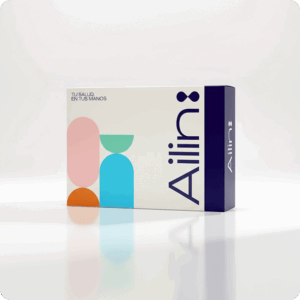
- The STD test Ailin's autotests are an essential tool for early detection in private and without having to travel to the doctor's office.
- Leaving an STI untreated carries serious risks, ranging from infertility to chronic or life-threatening diseases.
- Taking care of yourself is a responsible act towards yourself and those around you. Take the test and if in doubt, talk to professionals.
Bibliographical references.
- Sexually transmitted diseases: warning symptoms [Internet]. Women's Unit. 2020 [cited 2025 July 22]. Available from: https://www.unidaddelamujer.es/enfermedades-de-transmision-sexual-sintomas-de-alerta
- Flickr S en. What are some types of sexually transmitted diseases or infections (STDs/STIs) [Internet]. https://espanol.nichd.nih.gov/. [cited 22 July 2025]. Available from: https://espanol.nichd.nih.gov/salud/temas/stds/informacion/tipos
- Sexually transmitted infections. Female Reproductive System [Internet]. 2002 [cited 2002 July 22, 2025]; Available from: https://medlineplus.gov/spanish/sexuallytransmittedinfections.html.
- The stages of HIV infection [Internet]. Nih.gov. [cited 2025 July 22]. Available from: https://hivinfo.nih.gov/understanding-hiv/fact-sheets/stages-hiv-infection
- 5 possible long-term effects of chlamydia [Internet]. Everlywell.com [cited 2025 July 22]. Available from: https://www.everlywell.com/blog/sti-testing/long-term-effects-of-chlamydia/?srsltid=AfmBOooK0EFbkgTC1A0MKvoTO3x0dbPOShH04qSBxy2UyMPUPel_BukY&
- Chlamydia, Gonorrhoea and Syphilis, Asymptomatic Sexually Transmitted Diseases [Internet]. Forme Medical Center. Forme Medical Center and Urgent Care; 2021 [cited 2025 Jul 22]. Available from: https://formemedicalcenter.com/es/blog/clamidia-gonorrea-y-sifilis-enfermedades-de-transmision-sexual-asintomaticas