

189,00 €
Detect the risk of developing type 1 diabetes by measuring the 4 main autoantibodies with this test. Early detection is key. Stay ahead of the disease at home with results and medical interpretation.
The antibody test for type 1 diabetes analyses the presence of several autoantibodies together, rather than in isolation, giving a more reliable picture of the risk of disease progression. Detecting them before symptoms appear gives a more accurate picture of autoimmunity.
THE TYPE 1 DIABETES TEST IS FOR YOU IF...
Type 1 diabetes is an autoimmune disease in which the body stops producing insulin, requiring treatment with exogenous insulin from diagnosis. It usually appears in childhood or adolescence, although it can also occur in adults. Type 2 diabetes, on the other hand, develops through insulin resistance and is more lifestyle-related. It can be controlled with diet, exercise, oral medication and, in some cases, exogenous insulin. It is more common in adults, but can also occur in young people with risk factors.
It is a chronic autoimmune disease in which the immune system attacks and destroys the pancreatic beta cells responsible for insulin production. As a result, the body loses its ability to regulate blood glucose levels.
Symptoms include excessive thirst, increased frequency of urination, constant hunger, unexplained weight loss, extreme fatigue and blurred vision. Irritability, weakness and, in more advanced cases, fruity-smelling breath due to ketosis may also occur.
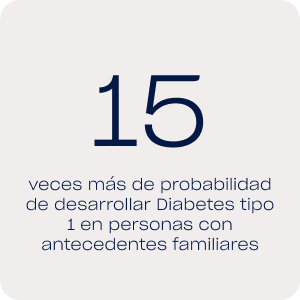
Type 1 diabetes (T1D1) has a genetic and environmental component. Having first-degree relatives with T1D or other autoimmune diseases such as thyroiditis, celiac disease or Addison's disease increases the risk, especially if the HLA-DR3 and HLA-DR4 genes are present. Environmental factors such as viral infections, alterations in the gut microbiota and certain elements in the early diet can trigger the autoimmune response.
It is not necessary to perform the test on an empty stomach, as this test measures antibodies associated with the disease, and blood sugar levels do not affect the test result. Unlike the fasting glucose test, which tests blood sugar levels, diagnostic tests for type 1 diabetes look for autoimmune markers, such as autoantibodies against beta cells in the pancreas. Therefore, you can test at any time of the day without your diet influencing the results.
Type 1 diabetes (T1D1) has a genetic and environmental component. Having first-degree relatives with T1D or other autoimmune diseases such as thyroiditis, celiac disease or Addison's disease increases the risk, especially if the HLA-DR3 and HLA-DR4 genes are present. Environmental factors such as viral infections, alterations in the gut microbiota and certain elements in the early diet can trigger the autoimmune response.
107,00 € Original price was: 107,00 €.68,00 €Current price is: 68,00 €.
Do you suspect you have SIBO? An early increase in these gases may indicate an overgrowth of bacteria in the small intestine, which could be related to digestive symptoms such as persistent bloating, abdominal discomfort or impaired digestion. Results in 7-10 working days.
92,00 € Original price was: 92,00 €.59,00 €Current price is: 59,00 €.
Is milk or cheese bad for you? Lactose is a sugar present in milk and its derivatives, and some people have difficulty processing it correctly. When this happens, certain gases increase and we can detect intolerance or malabsorption. From home, with results in 7-10 days and medical consultation available.
92,00 € Original price was: 92,00 €.59,00 €Current price is: 59,00 €.
Are fruit or honey bad for you? Fructose is a sugar found in fruits, vegetables and processed foods. Some people have difficulty metabolising it properly. With the fructose intolerance test you can check if your body digests it well. From home with results reported in 7-10 days.
189,00 €
.